01
Assess the drive and the approach
We check panel condition, the apron, and how water moves across the drive. On clay under caliche the failures usually trace to the base, so that is where the plan starts.
A Midland driveway carries real weight over ground that fights it: expansive clay under caliche, hard heat, and freeze-thaw winters. We tear out what has failed, cut and condition a proper base, and pour a drive with the steel and the air-entrained mix the climate demands.
Tear-out, forms, base, reinforcement, pour, screed, broom, joints, cure. The whole job, in 3D.
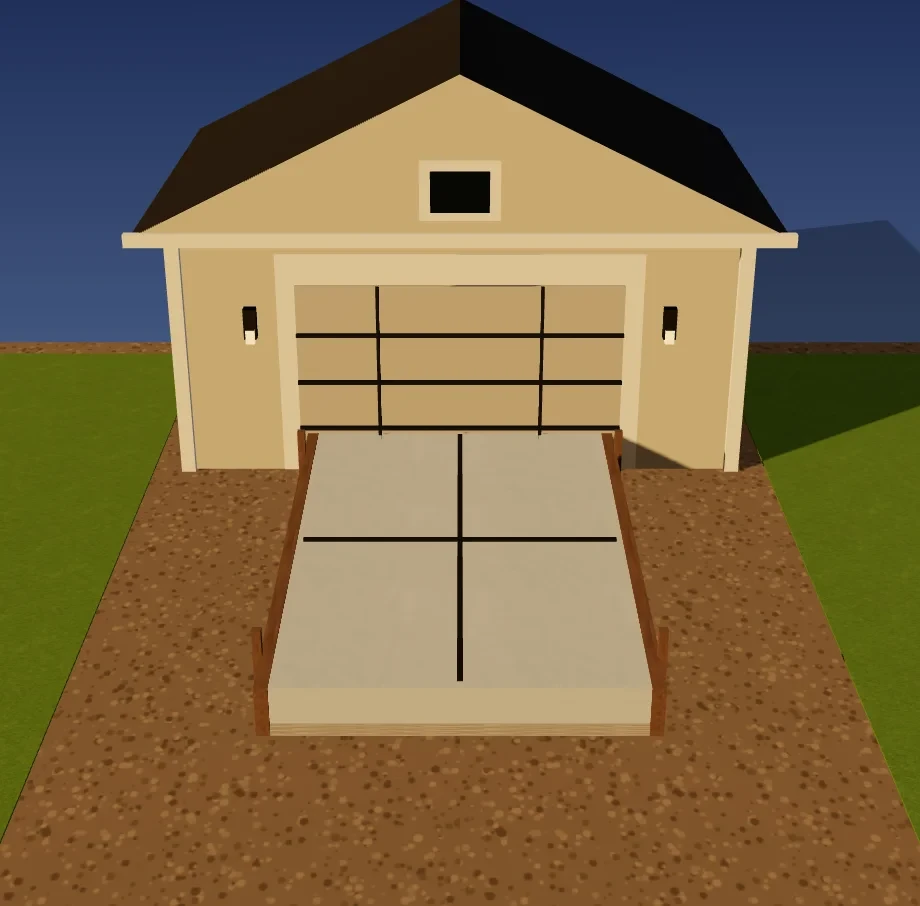
Drag the handle to reveal the finished pour.
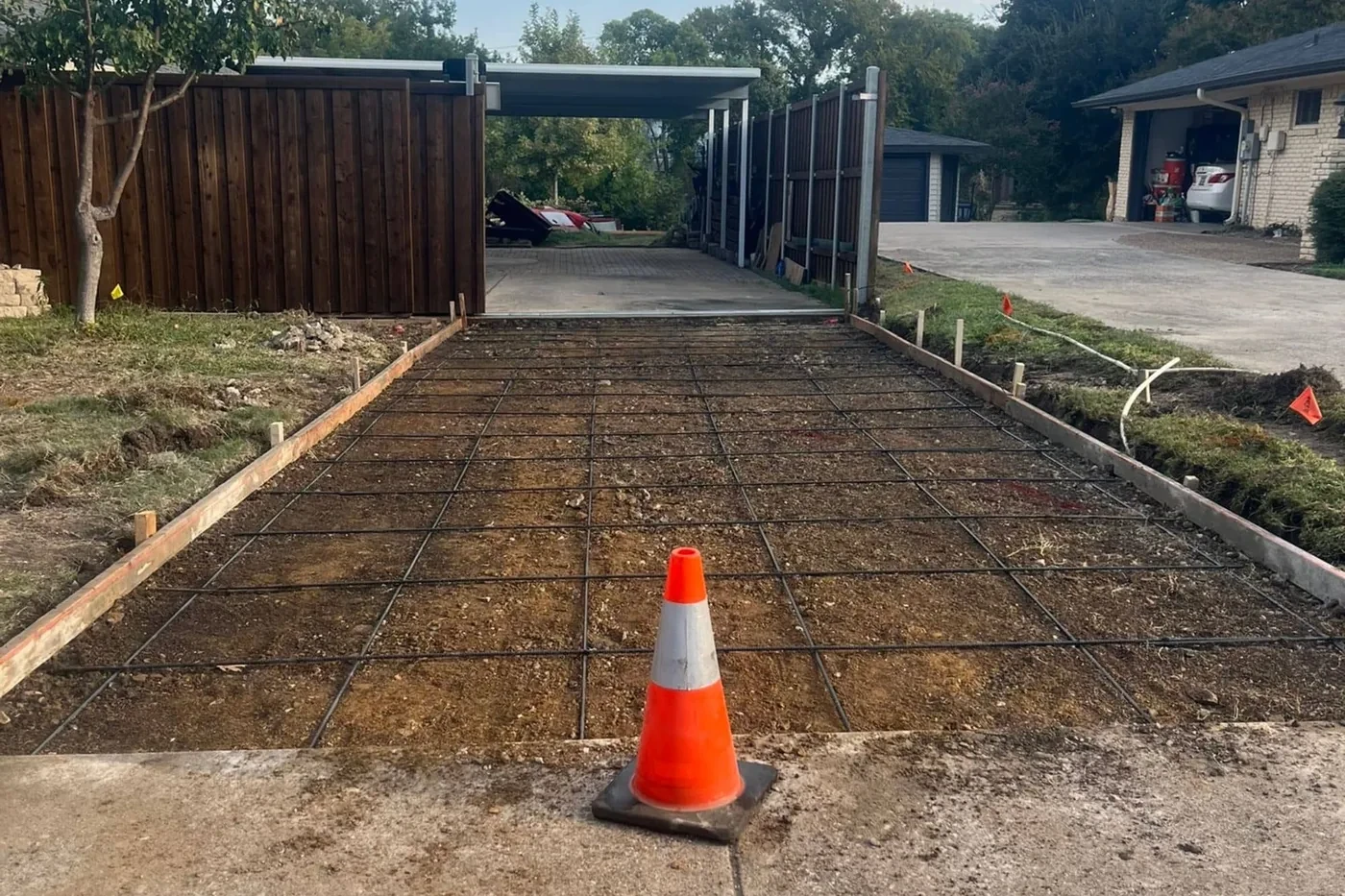
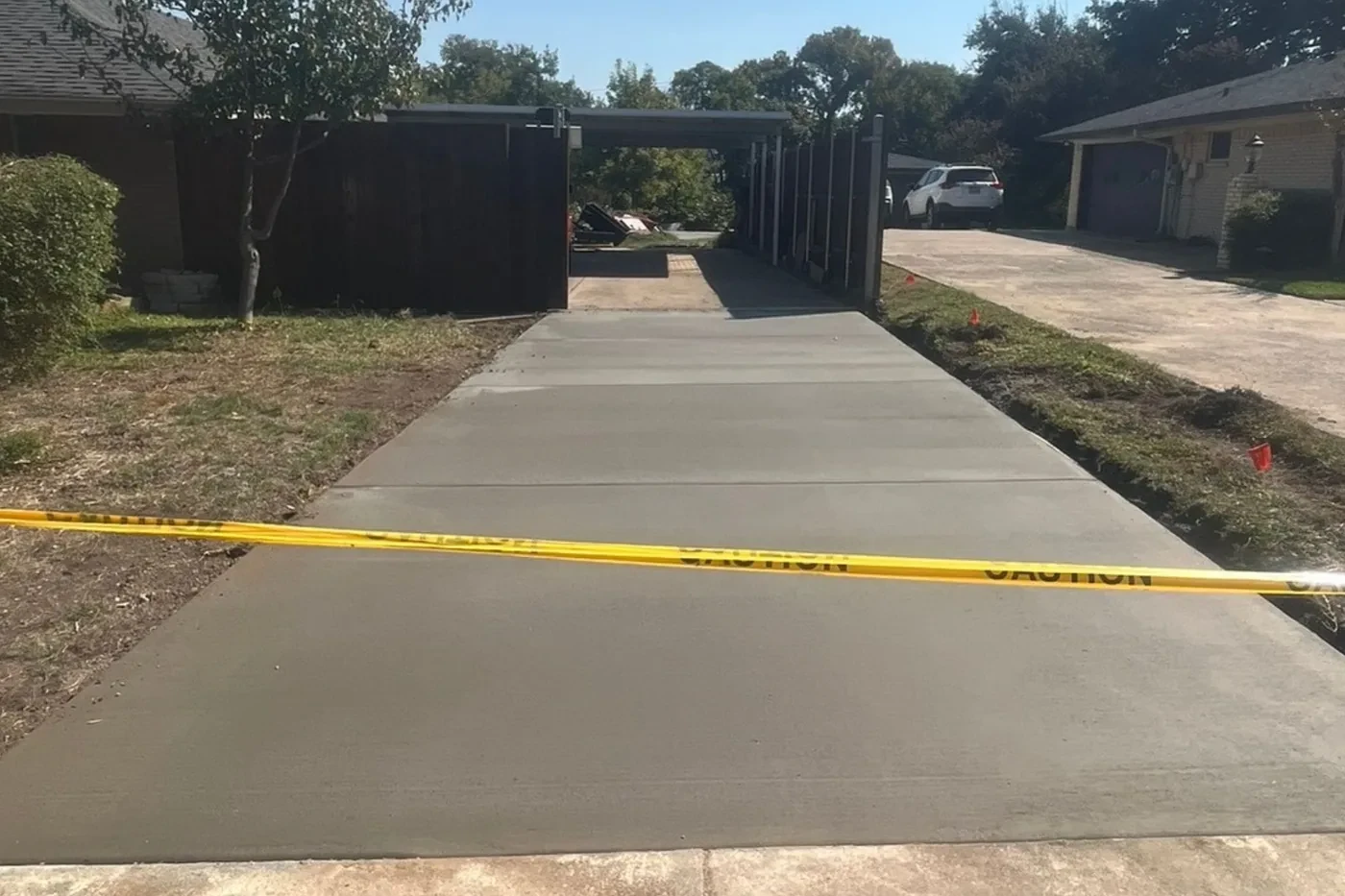
Credibility comes from how it's built, not from promises. Here's the order of operations on every concrete driveways job.
We check panel condition, the apron, and how water moves across the drive. On clay under caliche the failures usually trace to the base, so that is where the plan starts.
A drive that has cracked and faulted on moving clay is past patching, so slab and failed base come out and haul off the same day rather than getting buried under the new pour.
We cut to depth through the caliche, moisture-condition the clay, and compact a base set to drain away from the garage, because a drive poured on raw Permian ground moves from the first wet-dry swing.
Reinforcement sized to vehicle loads, joints laid out to the panel geometry, thickened edges where tires track, and an air-entrained mix so winter does not scale the surface.
Broom finish for traction, hot-weather curing through the summer, cold-weather practice when it is near freezing, and no vehicles for a full seven days, since a drive loaded early fails early.
Most contractors vanish after the deposit. We pick up the phone, show up when we say, and stand behind the work after the truck leaves. The follow-through is the difference.
A foreman we know runs your job and a vetted crew does the work, managed by Lucky's, one company accountable from the first call to the final walkthrough.
COI and lien waivers on file before we break ground. The documentation that lets commercial clients pay and gives homeowners peace of mind.
Prepped subgrade, reinforced and mixed to spec for the job, and proper curing. We build credibility through the process, not promises. On concrete driveways, that starts with assess the drive and the approach.
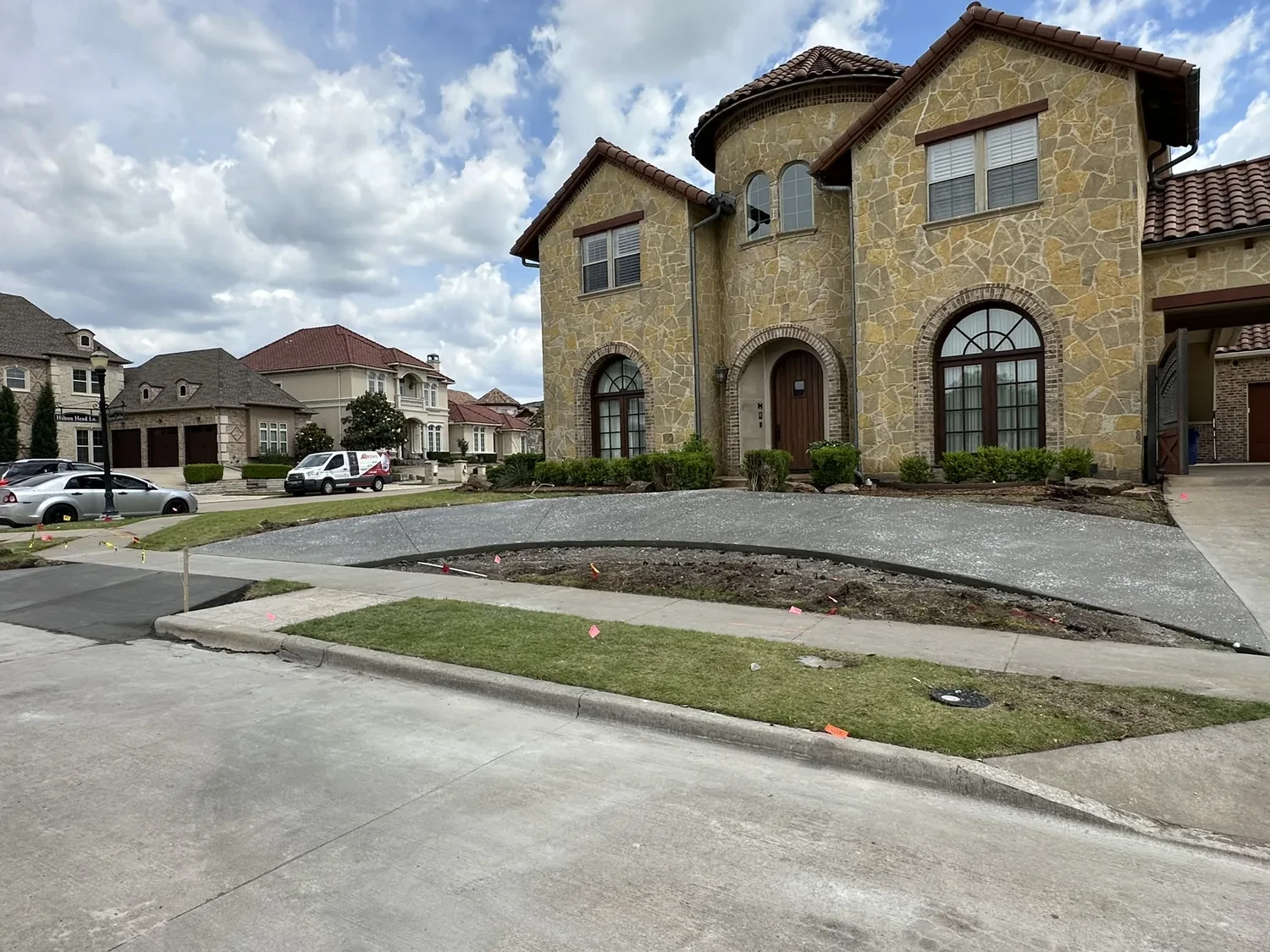
Most West Texas driveway replacements open around $8 to $14 per square foot, driven by size, tear-out depth, caliche, and whether the apron is included. We quote only after a site visit; a phone number the ground can undo helps nobody.
Almost always the base. A drive poured on raw caliche and clay with no conditioning and light steel moves with every wet-dry and freeze-thaw swing, and Midland delivers all of them. We fix it at the base, not with more concrete on top.
Sometimes, and we will say so honestly. If most of the drive is sound we swap only the failed panels, but on an old pour with a bad base, new panels next to worn ones usually buy a couple of years before the next call, and we would rather tell you that up front.
The apron lies in the city right-of-way, so replacing it runs on Midland's specification and permitting. We handle that paperwork as part of the job rather than leaving it with you.
We schedule early, adjust the mix, and keep the slab damp through the cure so the dry Permian heat does not pull the water out and flash-dry the surface. Hot-weather concreting is routine for our crews here.
Give it seven days. Concrete keeps gaining strength for weeks, and loading a fresh drive in its first days is the surest way to cut its life short. Walking on it is fine after a day or two.
You'll hear back from a real person, usually the same day. No call center, no runaround, no chasing us down.
Booking up fast this season. Or call (432) 300-7958