01
Read the lot and the ground
Before any quote we look at drainage, the caliche depth, and how the clay behaves on the lot, because the base plan on West Texas ground matters more than the finish that sits on it.
A Midland patio has to stand up to a brutal climate: hundred-degree Permian summers, hard winter freezes, and expansive clay under a caliche crust that swells and shrinks with the little rain we get. We cut and prep a real base, reinforce for the load, and use an air-entrained mix so the freeze-thaw does not scale the surface off.
Drag the handle to reveal the finished pour.
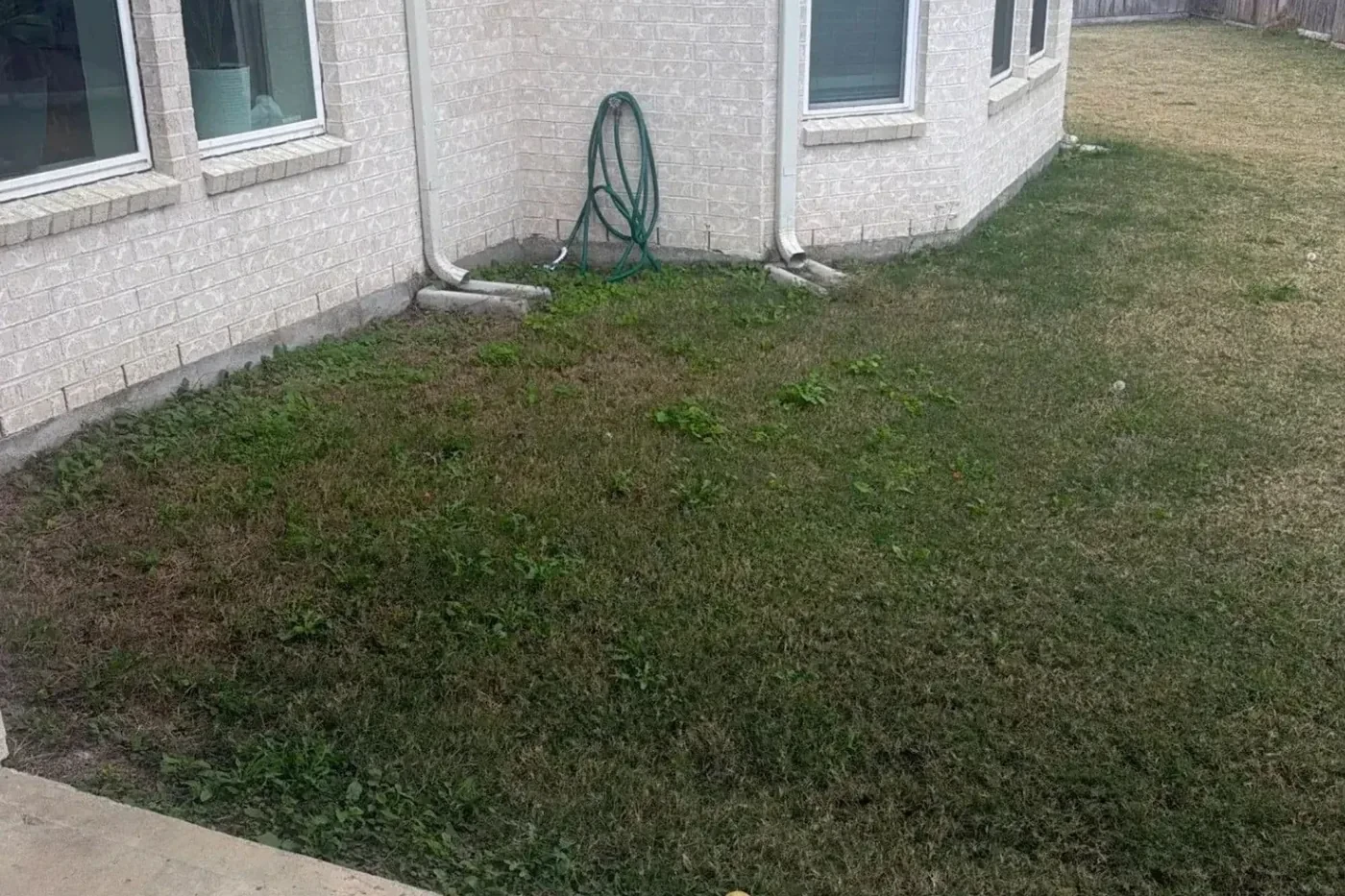
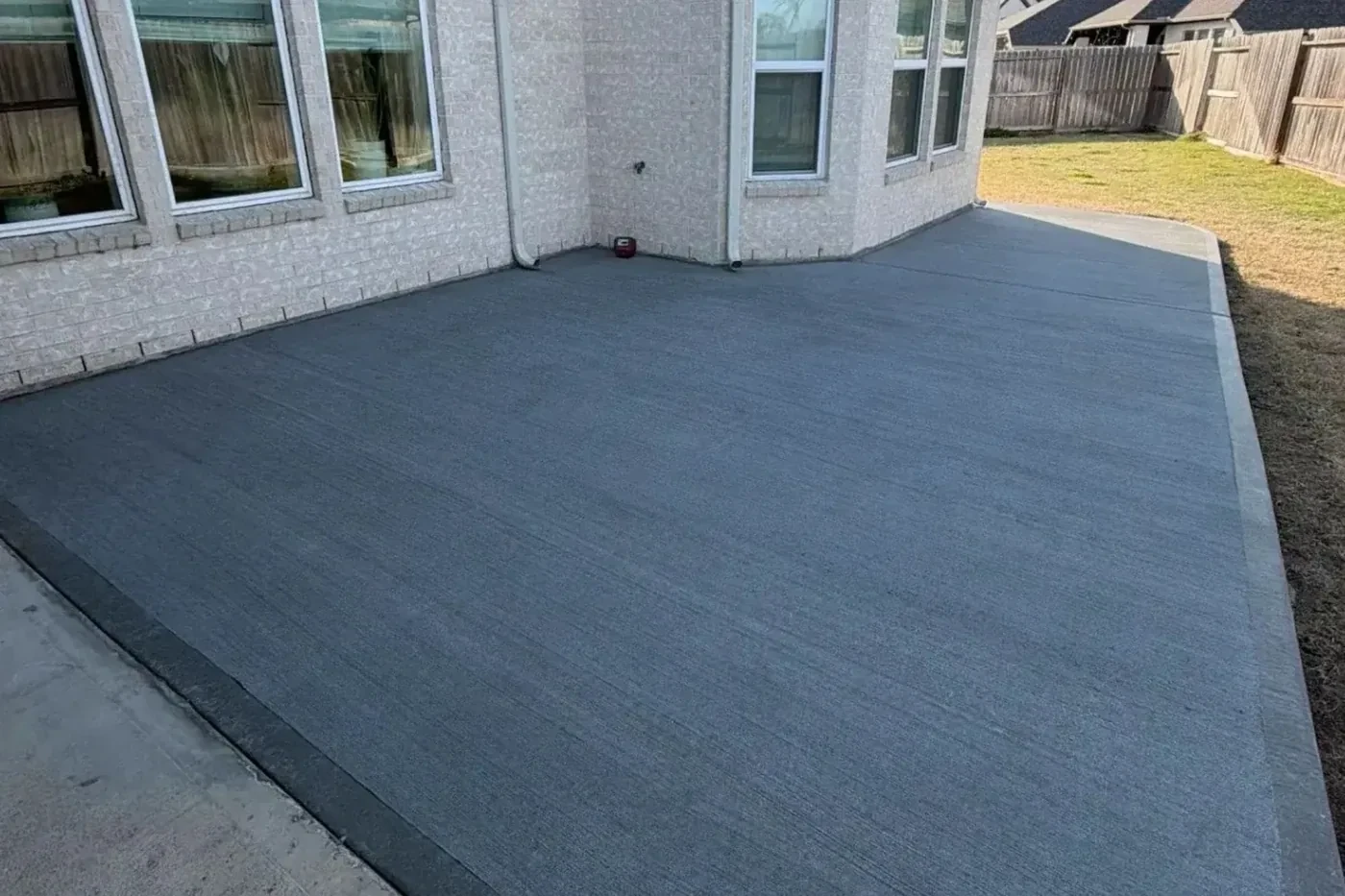
Credibility comes from how it's built, not from promises. Here's the order of operations on every concrete patios job.
Before any quote we look at drainage, the caliche depth, and how the clay behaves on the lot, because the base plan on West Texas ground matters more than the finish that sits on it.
Caliche is a hard hardpan and the clay below it swells and shrinks, so we excavate to depth, break the caliche where we must, and moisture-condition and compact a base instead of pouring on raw ground.
Steel goes in on chairs, and we run an air-entrained mix so the freeze-thaw cycles do not spall the surface. On the hundred-degree days we pour early, adjust the mix, and keep the slab damp so it does not flash-dry ahead of itself.
Rain is scarce here but arrives hard, so we pitch the slab so a downpour and any snowmelt run off toward the swale rather than pooling against the house on tight clay.
We saw or tool the joints on a plan that gives the shrink-swell movement a place to land, then cure the slab properly in the dry air before the furniture goes back.
Most contractors vanish after the deposit. We pick up the phone, show up when we say, and stand behind the work after the truck leaves. The follow-through is the difference.
A foreman we know runs your job and a vetted crew does the work, managed by Lucky's, one company accountable from the first call to the final walkthrough.
COI and lien waivers on file before we break ground. The documentation that lets commercial clients pay and gives homeowners peace of mind.
Prepped subgrade, reinforced and mixed to spec for the job, and proper curing. We build credibility through the process, not promises. On concrete patios, that starts with read the lot and the ground.
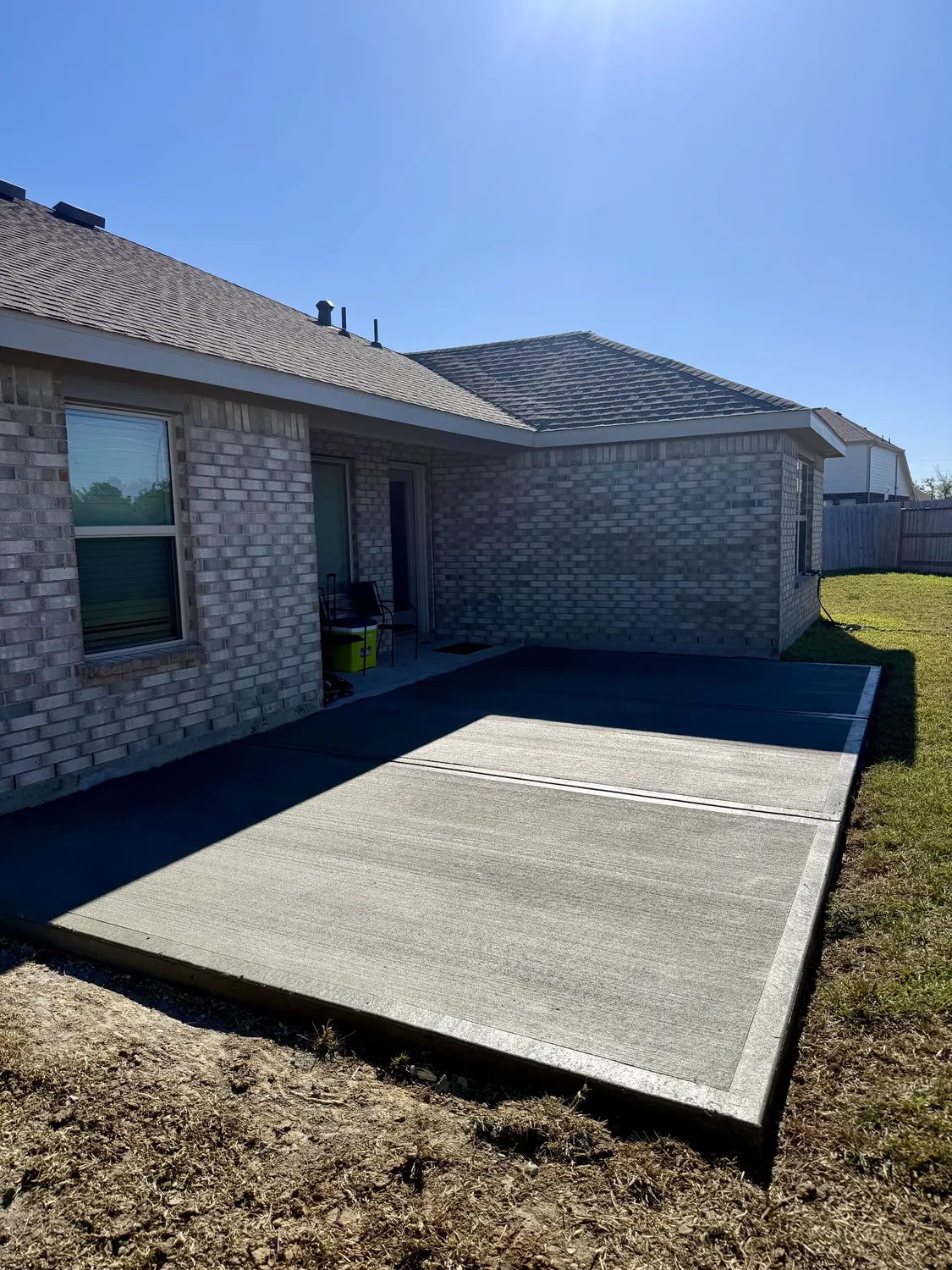
Most patios out here open in the $8 to $14 per square foot range, moving with size, access, tear-out, how deep the caliche runs, and the finish. Each job is priced after we see the lot; we will not hand you a phone figure the ground might force us to walk back.
Rarely worth it here. The old slab usually failed because of the clay and base under it, and capping that just carries the cracks upward. Tear-out costs a bit more now and is the line between a patio and a redo.
Concrete on Permian clay moves; anyone claiming otherwise is selling something. What we control is where: a conditioned base, steel, and sawed joints steer the movement into straight lines you will not notice instead of random cracks you will.
Yes. Midland takes hard freezes and repeated freeze-thaw through winter, which is exactly what spalls and scales a slab that was not air-entrained or cured right. We build for it, the same as we build for the summer heat.
Walk it in a day or two, set the furniture back around a week, and count on full strength near 28 days. In the dry summer heat we keep the slab damp early so the surface does not set ahead of the concrete under it.
Yes. If a cover or pergola is coming later, we thicken the slab and set footings where the posts will land, which is far cheaper now than cutting them in through caliche afterward.
You'll hear back from a real person, usually the same day. No call center, no runaround, no chasing us down.
Booking up fast this season. Or call (432) 300-7958